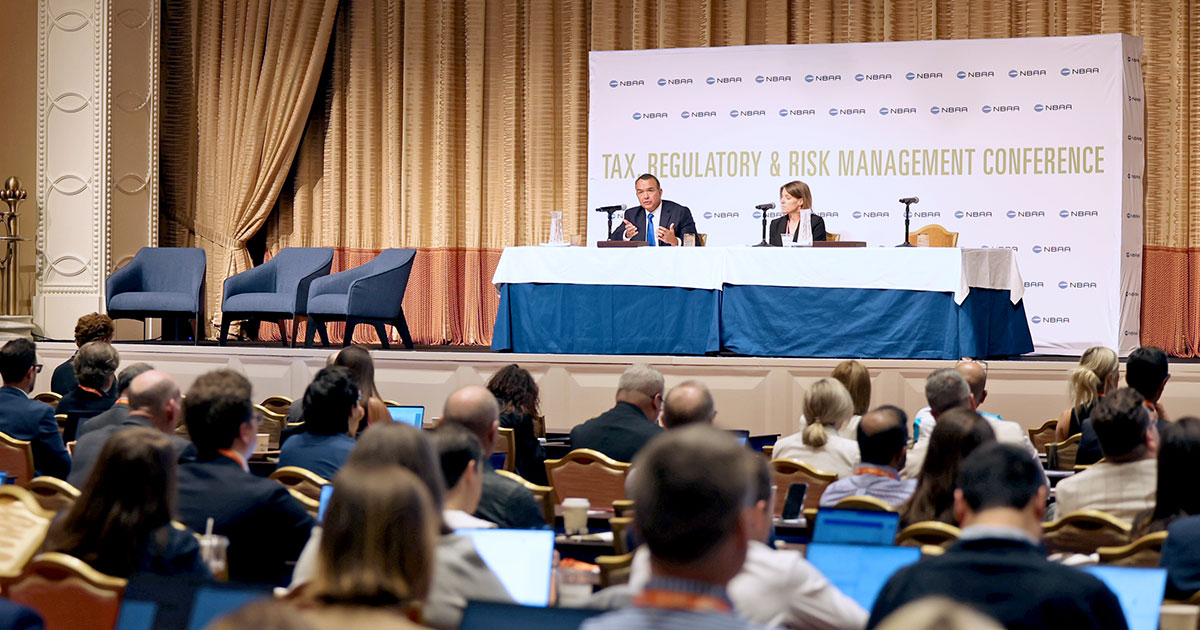
Business aircraft owners and operators must carefully document aircraft use, structure reimbursement arrangements properly and understand related-party relationships to preserve tax benefits and avoid audits, experts emphasized during the opening day of the 2026 NBAA Tax, Regulatory & Risk Management Conference.
Sessions examined heightened IRS scrutiny of bonus depreciation claims, permissible aircraft reimbursements and the complicated ownership relationships that can affect tax treatment. NBAA Tax Committee Vice Chair David Shannon of Lewis Brisbois Bisgaard & Smith LLP joined Sue Folkringa of Aviation CPAs and PwC’s Rick Farley to examine aircraft depreciation requirements and potential pitfalls.
"Bonus depreciation is always a hot topic because of the stakes," Shannon said. "We are able to take a deduction equal to the purchase price of the plane, which is very important. It helps drive deals."
However, purchasing an aircraft does not automatically guarantee eligibility. "The vast majority of people screw this up because of [the] pitfalls," he added. "They are not structured properly. They are not documented properly, and they don’t use the aircraft in a way that is easily defended."
Folkringa highlighted recent changes to IRS Form 4562, used to record assets for depreciation purposes, placing greater emphasis on aircraft ownership and use and signaling increased scrutiny of aircraft depreciation claims. "The IRS is looking for very pointed information," she said. "Is there an aircraft being reported? Is it being chartered? Is it being leased?"
Farley emphasized that aircraft must be ready and available for their intended use before depreciation can be claimed. "The best evidence of that is actually utilizing the aircraft," he said. "We recommend that your clients or your company use the plane for legitimate business reasons.
"Certainly, more than one [qualifying flight] is better," Farley added. "If the IRS comes knocking and if there's only one flight, they only have to challenge one flight."
Reimbursements Must Satisfy FAA and Tax Regulations
A follow-on session examined time-sharing agreements, affiliated-company arrangements, co-ownership and other methods of allocating aircraft expenses.
"From an FAA perspective, you have to do it the correct way," explained panelist Letisha Sailor of AvTax Advisors, PLLC, adding that commonly owned companies cannot automatically treat their aircraft operations as interchangeable.
"You cannot just say because these entities are both entities that I own" that expenses can be allocated between them without regard to tax requirements, she said.
Panelists also emphasized that reimbursement arrangements must satisfy separate FAA and IRS requirements. "The IRS and the FAA are different agencies, and they are looking at different things for different reasons," explained aviation attorney John Copley with Garofalo Goerlich Hainbach PC.
Robert Davis, of Silver Surfer Enterprises, LLC, examined how direct, indirect and constructive ownership can affect depreciation eligibility, SIFL calculations and aircraft reimbursement arrangements. "I call it an Ancestry.com puzzle," Davis said. "Spouse, siblings and then up and down the family tree of ancestors and lineal descendants."
Sailor urged operators to identify those relationships before preparing tax returns. "You need to keep a passenger manifest [of] the people that are typically going to be on your plane,” she said. “Don't wait until tax preparation time to see if you have a related-party issue.”
Earlier conference sessions addressed operational control, Part 91 and Part 135 requirements, personal aircraft use and taxable fringe benefits, reinforcing the importance of coordinated regulatory and tax planning.
The conference continues Oct. 19 with topics such as managing changes in the taxation and regulatory environments, the unique requirements of fractional ownership and jet card programs and know-your-customer and data security practices.